Engine warning light on? What a diagnostic check actually involves
A light on the dashboard doesn't always mean a big bill. What the colours mean, what a diagnostic check involves, and why a fault code is only the start.
2 min read
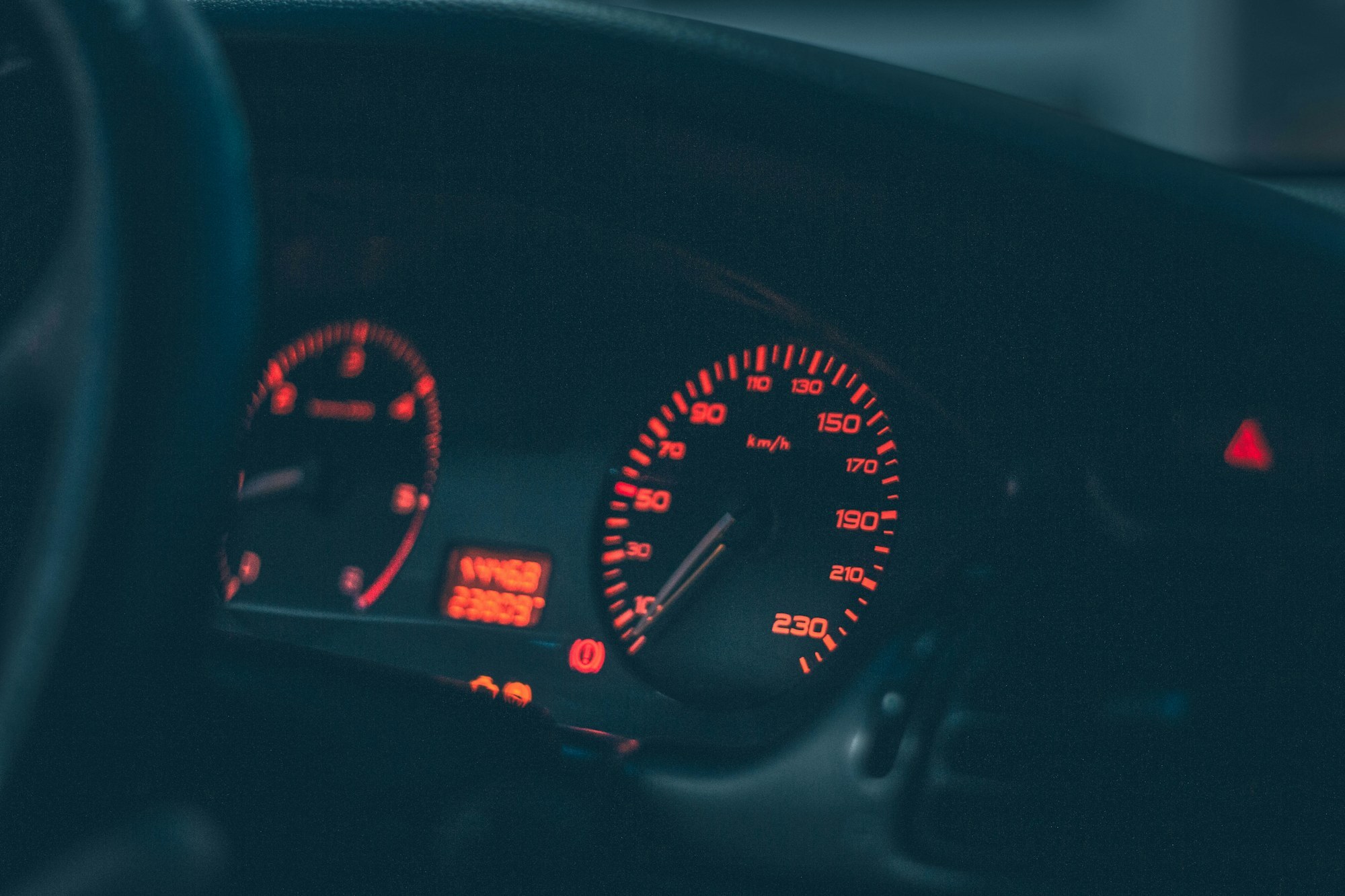
Few things spoil a drive like a new light on the dashboard. The good news is that most warning lights are the car telling you something early, while it is still a small job. The trick is knowing which ones can wait a day and which can't.
Red, amber or green?
Dashboard lights work like traffic lights.
- Red means stop when it is safe. Oil pressure, engine temperature, brake and battery charging lights are red for a reason. Driving on can turn a cheap fix into a new engine.
- Amber means get it looked at soon. The engine management light is usually amber, and so are the ABS, airbag, tyre pressure and glow plug lights.
- Green or blue just tells you something is switched on, like your headlights or cruise control.
If the engine management light is flashing, treat it like a red one. That usually means a misfire bad enough to damage the catalytic converter.
What a diagnostic check involves
Every modern car has a diagnostic socket, usually under the dashboard near the steering column. We plug professional diagnostic equipment into it and read the fault codes the car's computer has stored. We can also watch live readings from the sensors with the engine running, which is often where the real answer is.
A code is a starting point, not a verdict. A code for a lean mixture, for example, could be a split air hose, a lazy sensor or a fuel problem. That is why we test the part a code points to before we suggest replacing anything. It saves you paying for parts the car didn't need.
Can't you just clear it?
We can clear codes, and after a repair that is the right thing to do. But clearing a light without finding the cause only hides it. It comes back, and an engine management light that is on at MOT time is a fail.
What to note before you ring
- What the light looks like and its colour. A photo on your phone is perfect.
- When it came on: from cold, going uphill, after filling up?
- Anything else that has changed: less power, a new noise, a smell, smoke.
- The simple things: is the fuel cap on tight, and is the oil where it should be on the dipstick?
All of that helps us narrow it down before we even plug in.
Where we do it
Most diagnostic work can be done wherever the car is, on your drive or at your work around Buxton. If a red light is on and the car doesn't feel safe, don't drive it. Ring us and we'll talk about the best way to get it looked at.
Read more about our engine and diagnostic work.